Monday, June 23, 2014

Remove the Lag from DOTA 2


Many players face this problem, the LAG problem and its sux..!!!!
now i will show you how to remove it very fast very efficient, please follow the video step by step,,,, subscribe... :)


  >>>>>>>If you have a userconfig.cfg in that directory, open it. If you do not already have a userconfig.cfg:
Right-click in the folder
Go to: New>  Text Document
Rename the file userconfig.cfg
Open the file with Notepad
Type into the document clientport 270XX where XX are the last two digits of the clientport number. Acceptable values include 05 - 19 and 21 - 32
Save your userconfig.cfg
Launch your game 

Monday, June 2, 2014

Intel 18 Core and 36 Thread “Xeon E5-2699 V3″ CPU Spotted And Tested


 *please check the links at the right*


        Everyone knows that Intel’s Xeon processors offer a crazy level of CPU performance: the current flagship part, the E5-2697 V2, has a whopping 16 cores and 32 threads. With Haswell-EP, that’s the next generation of Xeon CPUs taking advantage of Haswell architecture instead of the current Ivy Bridge-EP based parts, that max core count gets bumped up to 18 cores and 36 threads. The new flagship part, the E5-2699 V3 has been spotted and it has a staggering 18 cores, 36 threads and 45MB of L3 cache running at 2.3GHz with a 145W TDP. 

       Interestingly this CPU has popped up at an Italian retailer selling for €3960.26 with alleged availability from June 12th. What’s even more interesting is that the same CPU part has shown up on the Chinese Chiphell forums giving an indication of its performance, which you can see below. Note that the below image is indicative of a dual CPU socket motherboard hence why the counts of cores and threads are doubled.


There are more details on other Haswell-EP parts that suggest there will be a:
  • Intel Xeon E5-2690 V3 which has 8 cores, 16 threads and a 2.9GHz clock speed
  • Intel Xeon E5-2692 V3 which has 12 cores, 24 threads and a 2.0GHz clock speed
  • Intel Xeon E5-2695 V3 which has 12 cores, 24 threads and a 2.2GHz clock speed
Those CPUs have shown up at Chinese retail site Taobao and you can find those here, here and here respectively. Intel’s Haswell EP platform will be the first Xeon platform to take advantage of native Quad Channel DDR4 support with a base support speed of 2133MHz which is a bump from the DDR3-1866 of the current Ivy Bridge-EP platform. Haswell-EP will get a third revision of the LGA 2011 socket expected to be called LGA 2011-3. The processors for this socket will range from 70W to 145W in TDP with special 160W workstation parts. Rumour has it that the new Haswell-EP Xeon line up is likely to be released at Intel’s IDF 2014 event on the 9th-11th of September. However, given the information provided by certain retailers we may indeed see these parts sooner.
 *please check the links at the right*
This article was copied from eteknix.com  thnx for them

Forget fillings, scientists just discovered how to regrow full teeth using lasers...!!!


*please check the link on the right*


      Good news for all you taffy addicts and crystal meth smokers out there — a Harvard-led team of scientists has just devised a way to regrow teeth. If developed further, this technology could spell the end things like fillings and dentures, and even lay the groundwork for other regenerative procedures like wound healing, bone regeneration, and more.


      Published yesterday in the journal Science Translational Medicine, the procedure used to achieve this tooth regrowth sounds like it’s taken straight out of a science fiction novel. The team used a low-power laser beam to trigger human dental stem cells and encourage them to form dentin: the hard, bone-like tissue that lies underneath a tooth’s enamel and makes up the bulk of a tooth’s mass.


     This is groundbreaking because up until now, stem cells –undifferentiated cells that have the ability to become different, more specialized types of cells– have proven difficult to manipulate with much precision. Scientists have long been fascinated with stem cells because of their potential to repair or replace damaged or worn out tissues, but generally speaking, medical researchers have struggled to figure out ways to coax them into becoming the specific types of cells, like dentin or skin, for example. 


     Pinning down the mechanism that causes a stem cell to transform into a particular type of new cell is tough. Previous techniques required scientists to isolate stem cells from the body, manipulate them in a lab until they grew into the particular kind of cell that was needed, and then return them to the body. Not only are these methods difficult and time-consuming, but they also face a number of regulatory hurdles, so progress in this area has been relatively slow.


     This new laser-based method, however, is considerably faster and vastly less invasive. Furthermore, the new technique was proven to work on multiple lab and animal models, which is extremely promising. We’ll let you dig into the technical details on your own, but the big takeaway here is that this was a big step for stem cell research, and will hopefully accelerate the pace at which next-gen restorative medicine is developed.

*please check the link on the right*


This article was copied from digitalrtends.com  thnx for them

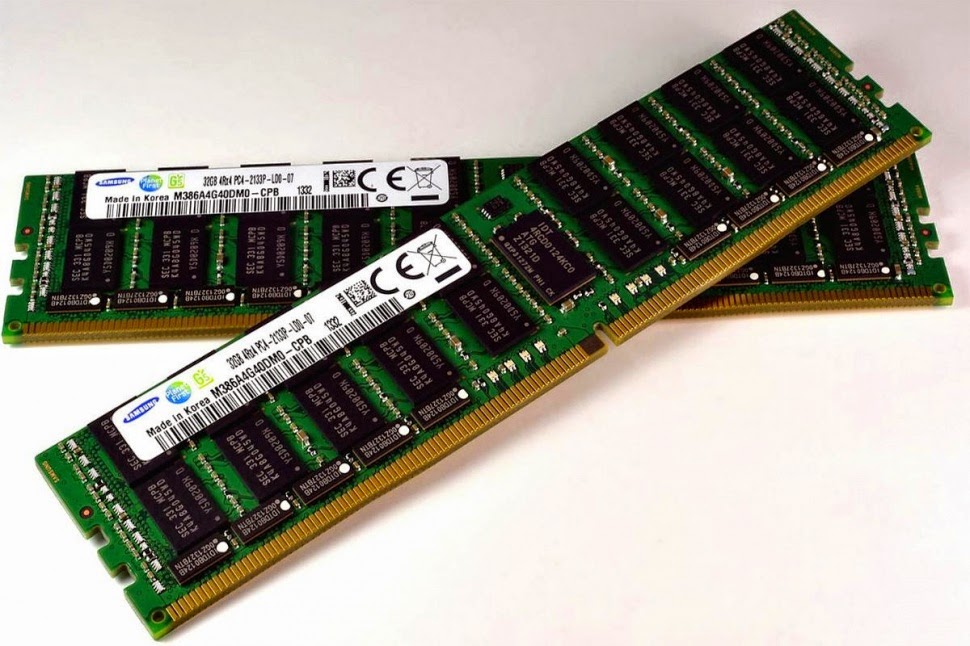
The lowdown on DDR4 RAM: When will it get here, and what will it do once it arrives?


*please check the link on the right*


         Over the past few years, nearly every PC component, including storage drives, graphics accelerators, motherboards, and CPUs, has seen significant performance updates—everything except the DDR (double data rate)DRAM (dynamic random access memory) chips used as system RAM in our laptops, PCs, servers, and some tablets. The current DRAM standard, DDR3, was launched in 2007, and it has been the primary memory chip used in a wide range of computing devices for most of that time.


How fast is DDR4?


      Later this year, Intel will release its Haswell-based (Haswell-E) X99 chipset with support for DDR4: the new, faster memory chip standard. After being in development for five years, the new chips, which will provide roughly 50 percent more bandwidth, and consume about 30 percent less power. According to Intel, they’ll bedeployed in new motherboards in the “second half of 2014.”

      Not only will the X99 motherboard support DDR4, but it will also host 8-core processors—twice the number in the current Intel Core CPUs. The top DDR4 bus speed will be 3200MHz, compared to DDR3’s 2400MHz, and it will support data transfer rates of up to 3.2 billion transfers per second, which is twice the transfer speed of DDR3. Furthermore, the new chips use only 1.2 volts of power, compared to DDR3’s 1.5 volts. If those benefits aren’t enough, DDR4 also provides improved diagnostic and debugging tools for increased overall reliability.


When will we see DDR4?


        Samsung and a few other chip makers have already started manufacturing DDR4 memory sticks. Samsung Semiconductor says it’s churning out 32GB sticks for the premium server market, as well as what the company claims this is the world’s smallest and highest performing 4GB RAM chip. It’s expected that we’ll start seeing DDR4 chips first in high-end database and enterprise resource planning (ERP) servers, with DDR4-powered laptops and desktops coming to market in 2015. In addition, Samsung announced a low-power version of DDR4 (LP-DDR4) for mobile devices back in January 2014.

       According to the Joint Electron Devices Engineering Council (JEDEC), the organization that sets memory standards, DDR4 also supports deep power down, which allows it to go into a mode of sleep that requires no memory refresh. Plus, it can refresh a single chip on a DIMM, instead of forcing a refresh of the entire DIMM. These, and some other power enhancements, allow DDR4 to use up to 40-50 percent less standby power.


DDR’s last dance


      Most experts believe that DDR4 is the last generation of DDR DRAM that will be made. A few other types of non-volatile memory that can retain data, such as phase-change memory, MRAM (magneto-resistive RAM), and RRAM (resistive RAM), are under development, and look promising.
Phase-change memory, or PCM/PRAM, provides higher read/write bandwidth, higher endurance, and lower latency than DRAM does. According to memory maker Micron, “it [PCM] addresses the growing performance gap between DRAM and nonvolatile memory technologies.”
With faster processors, and soon-to-be-released SATA Express solid state drive technology making our computing devices faster, it won’t be long before we need faster memory to keep up. DDR4 should fill that gap for the immediate future.

*please check the link on the right*


This article was copied from digitaltrends.com   thnx for them


Thursday, May 29, 2014

Apple officially confirms the acquisition of Beats for $3 billion


  Apple officially announced that it will acquire Beats Music and Beats Electronics. The Cupertino giant will pay $3 billion for the purchase ($2.6 billion in cash and $400 million in stock), not the initially circulated $3.2 billion.


*please check the link at the right*


Under the terms of the deal, the co-founders of Beats Audio Jimmy Iovine and Dr. Dre will join Apple’s executive ranks. The acquisition is subject to regulatory approvals and is expected to close in Q4 this year.
Unsurprisingly, both parties expressed their satisfaction with the deal. Apple’s CEO Tim Cook tweeted a photo sharing a laugh with the new members of the company’s executive team. See it below.
Jimmy Iovine, the Beats co-founder and one of the most respected figures in the music industry had the following to say:
“I’ve always known in my heart that Beats belonged with Apple. The idea when we started the company was inspired by Apple’s unmatched ability to marry culture and technology. Apple’s deep commitment to music fans, artists, songwriters and the music industry is something special.”
Both Beats Audio and Beats Music will keep operating on their after the acquisition. However, Apple’s top executives Eddy Cue and Phil Schiller will run the duo of businesses.


Furthermore, Tim Cook confirmed that the recently launched Beats Music streaming service will remain available for Android and Windows Phone devices after the acquisition. Beats Music is widely regarded as one of the main reasons for Apple’s interest in the transaction.
*please check the link at the right*

This article was copied from gsmarena.com thnx for them

Saturday, April 26, 2014

How to make money online

How to make money online


  1. The first step is to stop Googling things like, "how to make money online." Not because you shouldn't want to make money online, but because the stuff you're going to find by doing that is going to help you lose money online. Sort of like asking a casino owner how to make money in Vegas...
  2. Don't pay anyone for simple and proven instructions on how to achieve this goal. In particular, don't pay anyone to teach you how to write or sell manuals or ebooks about how to make money online.
  3. Get rich slow.
  4. Focus on the scarce resource online: attention. If you try to invent a way to take cheap attention and turn it into cash, you will fail. The attention you want isn't cheap, it's difficult to get via SEO and it rarely scales. Instead, figure out how to earn expensive attention.
  5. In addition to attention, focus on trust. Trust is even more scarce than attention.
  6. Don't worry so much about the 'online' part. Instead, figure out how to create value. The online part will take care of itself.
  7. Don't quit your day job. Start evenings and weekends and figure it out with small failures.
  8. Build a public reputation. A good one, and be sure that you deserve it, and that it will hold up to scrutiny.
  9. Obsessively specialize. No niche is too small if it's yours.
  10. Connect the disconnected.
  11. Lead.
  12. Build an online legacy that increases in value daily.
  13. Make money offline. If you can figure out how to create value face to face, it's a lot easier to figure out how to do the same digitally. The web isn't magic, it's merely efficient.
  14. Become the best in the world at something that people value. Easier said than done, worth more than you might think.
  15. Hang out with people who aren't looking for shortcuts. Learn from them.
  16. Fail. Fail often and fail cheaply. This is the very best gift the web has given to people who want to bootstrap their way into a new business.
  17. Make money in the small and then relentlessly scale.
  18. Don't chase yesterday's online fad.
  19. Think big, act with intention and don't get bogged down in personalities. If it's not on your agenda, why are you wasting time on it?
  20. Learn. Ceaselessly. Learn to code, to write persuasively, to understand new technologies, to bring out the best in your team, to find underused resources and to spot patterns.
  21. This is not a zero sum game. The more you add to your community, the bigger your piece gets.

Tuesday, February 25, 2014

Hands on: Samsung Galaxy S5

*please check the link on the right*

      
   I’ve covered tech for years, but Samsung’s Galaxy S5 announcement in Barcelona was the largest product unveiling I’ve ever seen. I was one of thousands of journalists herded into a ballroom that could only be outsized by a stadium. There was pushing, shoving, and much anticipation.

    Why all the fuss? Because of the number Samsung showed before it said anything else: 200 million. That’s how many Galaxy S phones have sold around the world. The Galaxy S5 will carry that torch for the next year, and from our early impressions, 201 million is just around the corner.

A Galaxy packed with new sensors, and waterproofed…ness

     Hardcore geeks may be disappointed in the Galaxy S5’s spec sheet, which breaks no new ground this year. It appears to be as powerful as top devices like the Galaxy Note 3, LG G2, and Sony Xperia Z1S, but no more so. It also looks almost identical to last year’s Galaxy S4. But this is because Samsung is focusing on other kinds of hardware advancements this time around. The GS5 has an IP67 waterproof and dustproof rating, a heart-rate monitor under its rear camera, and a fingerprint sensor inside its Home button. These are all real advancements that could be useful to real people. This is in stark contrast to Samsung’s Galaxy S4 unveiling, where it concentrated on numbers and a bunch of apps that nobody wanted or cared about.


    Waterproof: Last year, Samsung released the GS4 Active as a waterproof and dustproof variant of the Galaxy S4 model. It one of our favorite phones on AT&T, and we’re very excited to see the standard S5 pick up this superpower. You won’t have to worry about your phone if it’s raining, you’re shoved into a pool (it can happen), you drop it in quicksand, or you want to check if Stacy in Sales returned your Facebook message while you’re in the shower. Less worries means more happy.

    Heart-rate monitor: Not everyone will use or care about this feature, but if you want to check your heart rate after a workout, or for medical reasons, you can easily do so with the GS5. It has a small red light that shines through your finger on the back of the phone. The built-in S Health app will record your heart rate every day.

    Fingerprint scanner: We weren’t able to test this sensor properly, but Samsung’s new Home button doubles as a fingerprint scanner that works a lot like one from CrucialTec we demoed last year at MWC. Yes, it’s an iPhone 5S rip off, but if biometrics are going to take off, they have to be widely accepted. Samsung is launching fingerprint scanner with the ability to make payments over its system or PayPal, which is more than Apple is letting anyone do. This could be a huge addition to the GS5.

Same look, but a cleaner inside

     We like new bells and whistles on the outside of a phone, but we also appreciate that Samsung has cleaned up the inside, too. The Galaxy S5’s user interface is simpler and cleaner than previous devices. It’s easier to find features, and the Settings menu has a new gridded view that makes a lot of sense.


    Even the Recent Apps screen and Notification menu seem simpler. And if you want a real simple mode, you can make the icons extra big by turning on an old-folks mode that comes with a built-in magnifier.
Since there is only 16GB of space on the phone, we’re very happy that the unit we tested only had 42 apps installed on it. That’s opposed to about 80 on phones that came out late last year. Samsung has kept a lot of its own apps intact, but isn’t shying away from Google apps, either.

Ultra Power Saving Mode is a winner

    We briefly tried out Samsung’s new Ultra Power Saving Mode, which will help you conserve battery life in a jam. It’s the most intense battery-saving mode we’ve ever seen. It shuts down all services except a few vital ones, and turns the screen black and white. But according to Samsung, it can squeeze a full 24 hours out of a nearly empty battery.


Glam? We don’t think so

    Samsung used the word “glam” and “modern” several times to describe the pitted, soft-plastic battery cover on the GS5. We don’t really see it. There’s nothing bad looking about the new GS5, but there is nothing “glam” about it either. Samsung has succeeded in creating another Galaxy that’s mostly devoid of personality, but also won’t offend the tastes of many. It should sell well, is what we’re saying.


Conclusion

    The Galaxy S5 looks like a fantastic phone. It doesn’t look different, which will turn off journalists and elate iPhone fans the world over, but there’s a lot to love. For the first time, Samsung is innovating like Apple, instead of just mimicking it. Last year we got a bunch of new apps, and with the Galaxy Pro tablets at CES we saw a stupid new interface, but with the GS5, Samsung has taken a hard look at what people really want from its phone and tried to deliver a compelling new product. We can’t wait to get a Galaxy S5 in for review.

Highs

  • Fast, powerful processor
  • Clean, redesigned interface
  • Runs Android 4.4 KitKat with less bloatware
  • Waterproof and dustproof
  • Built-in fingerprint scanner, heart-rate monitor
  • Feels comfortable to hold
  • MicroSD support
  • Removable battery with new Ultra Power Saver Mode

Lows

  • Stale design
 
 
*please check the link on the right*


This article was copied from digitaltrends.com thnx for them.

Thursday, January 23, 2014

iPhone 6 Design Rumored To Be Finalized, Will Included Bigger Display?

*Please check the link on the right*

    It seems with every new year there are new rumors about what the next iPhone will be like. There has been plenty of rumors floating around recently and while nothing will be set in stone until Apple makes its announcement about the iPhone 6 there are several reliable sources that in the past have been close to accurate with their information about the upcoming release of the latest iPhone. It looks like, according to these numerous sources that we will be getting two new iPhone models in 2014, these will be an iPhone 6 and a new larger iPhone with a display that will be a mix in size between phone and tablet more commonly known as a phablet. While the debate about what size each of the new iPhones will be it seems a new report has come out claiming that the iPhone 6 design has now been finalized.

    Several sources have all claimed to have insider knowledge these being DisplaySearch, Respected Apple analyst Peter Misek and KGI Securities analyst Ming-chi Kuo. Display search are saying that the new iPhone 6 display will have a 4.7 inch screen with a 1,600 x 900 pixel resolution, while Apple analyst Peter Misek say it will have a 4.8 inch display. However Ming-chi Kuo from KGI Securities who has had without a doubt the best track record when it comes to Apple’s plans would only say that the display on Apple’s new iPhone 6 would be between 4.5 and 5 inches.

    While all this is speculation one thing that we can be sure of is that what ever the size of the display being used in the iPhone 6 is, it seems Apple have already finalized it. This news comes from Cowen and Company analyst Timothy Arcuri. This information came from a note to clients on Wednesday that was picked up by Apple Insider, with Arcuri stating that the iPhone 6′s design has been locked down and will have a 4.8 inch display.

    For a complete list of features in the new iPhone 6 we’ll have to wait until it’s launch which should be fall this year, although there is speculation that the iPhone will debut this summer at Apple’s annual WWDC conference.

*Please check the link on the right*


*This article was copied from eteknix.com ... Thnx for them

Monday, December 30, 2013

تسبب فشل كبدي .."الصحة" تمنع تداول بعض منتجات بناء الأجسام في فلسطين..!!!!

*الرجاء الضغط على الرابط على اليمين*

      أعلنت الإدارة العامة للصيدلة في وزارة الصحة الفلسطينية، منع تداول جميع منتجات بناء الأجسام ، وذلك بعد تحذير من  منظمة الغذاء والدواء الأميركية (FDA)، حول منتج بناء العضلات المسمى "Mass Destruction"

      واتضح من أبحاث (FDA) أن هذا المنتج يتسبب في حالة فشل كبدي تحتاج إلى زراعة كبد وتأثيرات سلبية أخرى، لاحتوائه على ستيرويدات بنائية (Anabolic steroids) التي يؤدي تعاطيها  إلى تدهور في وظائف الكبد (مثل ارتفاع أنزيمات الكبد وحدوث الصفراء وأورام الكبد الحميدة أو الخبيثة)،واختلالات هرمونية في كلا الجنسين يمكن أن تؤدي إلى عقم وارتفاع في ضغط الدم وتضخم عضلة القلب، الشيء الذي يسبب قصورًا في الشرايين التاجية والتعرض لجلطات في القلب أو المخ وحالات وفاة مفاجئة.

       وأكدت مديرة الإدارة العامة للصيدلة رانيا شاهين ، أن استخدام هذا النوع من المنتجات أكثر ما يكون في الفئة العمرية (16- 25) عامًا، بغية بناء الأجسام، لكن لا يُمنع صرفه لعدد من المرضى الذين يتناولونه لأسباب أخرى تتعلق بنقص الهرمونات.

      وبناء على دراسات المنظمة الأميركية، منعت وزارة الصحة الفلسطينية استخدام أو تسويق كل منتجات بناء الأجسام التي تحوي الستيرويدات المذكورة أو الهرمونات الذكرية سواء في المراكز الصحية أو الرياضية، وعلى مستخدمي هذا المنتج ضرورة مراجعة الطبيب أو أي مقدم رعاية صحية إن ظهرت عليه أعراض تعب أو آلام في الظهر أو البطن أو تغير لون البول أو أي تغير غير مفسر في حالته الصحية، وفق التعميم الذي نشرته دائرة المعلومات الدوائية في الإدارة العامة للصيدلة عبر موقعها الإلكتروني.

*الرجاء الضغط على الرابط على اليمين*

المصدر : وطن للأنباء 

Saturday, December 7, 2013

LG G Flex Review

*please check the link on the right*

        LG may have just released the G2, but it doesn’t seem content to stand still. Like Samsung, LG is always experimenting, and the G Flex is the latest creation to spring from its labs. The G Flex is LG’s biggest phone yet, with a 6-inch screen that’s curved and a few other little tricks. But can a lot of small gimmicks add up to make a good phone? We’ve been testing the G Flex for the last few days to find out.

The first 6-inch phone we want to hold

If you buy a Galaxy Note 3 or its other gigantic contemporaries like the HTC One Max, you’re putting up with their enormity for the sake of some screen real estate. They aren’t all that comfortable to hold. They’re like giant tiles: big, square, and flat.
I’ve never made the leap to a phablet-sized phone. They’re just too big for me. But after using the G Flex, I may have found a phone that manages its size well.


Thanks to the curved screen – which bends top to bottom like a banana – and LG’s button placement, the G Flex is the most comfortable phablet I’ve ever held.
The curve of the screen is subtle and the overall design feels a lot like a bigger, better Galaxy Nexus. Remember that phone? Like the G Flex, it supposedly had a curved (not that you could tell) OLED screen with a peculiarity to it. That’s where the similarities end, though. As we’ll discuss later, the G Flex has the battery life of two or three Galaxy Nexus’s.
So why is it comfortable? Believe it or not, that small curve helps. Instead of your hand molding around a rigid brick, the G Flex bends with it. It’s far more comfortable to hold to your face and take calls than an HTC One Max.

Like the LG G2 (our favorite Android phone of 2013), the power and volume buttons on the G Flex are on its back, directly in the center. Every other phone you’ll use has volume and power buttons on the sides. LG’s decision to move these buttons will jar you at first, but it makes life with a giant 6-inch phone far easier. It’s more of a stretch than on the G2, but thanks to the power and volume button placement, you can press them while also reaching the navigation buttons (Home, Back, Menu) with your thumb. You can also reach up and pull the notification window down without shuffling your grip. At some point, shuffling a phone around your palm always leads to a drop, so we’re glad LG takes grip and hold so seriously.


     Finally, LG’s KnockOn feature, which lets you turn the phone screen on or off by tapping on it twice, also makes one-handed use more possible, as does the option to shrink the keyboard.
For a massive phone, the G Flex is remarkably comfortable. Did we mention the power button lights up? We have no reason to, but we like it.

So, what about that curved OLED screen?

   There’s no practical reason why you’d want to look at a curved screen, but it is fresh. Looking at videos and items scroll further and closer to you as they move up and down the screen brings with it a small, subtle joy. We found it a little jarring to go back to flat screens after using the curved G Flex. There’s nothing technically superior about it; it’s just different. We don’t think it will bother you or blow you away.

Though LG has heavily criticized Samsung for using AMOLED screens, the G Flex does have an OLED display. You can tell when you’re using an OLED screen because the colors are sometimes more saturated (some say too vivid, to the point of discoloration) and blacks are extremely black. On LCD screens, when black is displayed, it’s still being shown on a lit-up pixel. In OLED, because each pixel is lit independently, black pixels are actually completely turned off. You can’t get blacker than that.

We like the OLED screen on the G Flex, but its 1280 x 720 pixel resolution is a step down from 1920 x 1080 pixel displays seen in most high-end phones, including the G2. We’re blaming the curve for this. You’ll also have to get used to a grainy texture in the background. Like the Galaxy Nexus (and some other AMOLED devices) there is a noticeably grain behind all your screens. This doesn’t bother us, but it might bother you. Make sure to hold and look at menus on the phone (the keyboard is a good test) to make sure it doesn’t drive you nuts.

Small bonus: Thanks to the curve of the screen, the G Flex will (barely) stand up on its side, making Netflix and Hulu watching much easier.

About the “Flex” and healing in G Flex …

One of the G Flex’s tricks is that if you set it screen down, you can put up to 88 pounds of pressure on it and it will bend, not break. We tried this out and … success! It does flex a few millimeters and appears more durable than non-curved phones in that way. LG has employed special types of batteries to achieve this bendability.

The other super power that LG touts is the ability for the plastic back of the phone to heal itself. There’s a special, urethane-like coating on the plastic that apparently re-aligns its own molecules to repair small scratches. This may save your phone from a scratch or two in your pocket, but we were more impressed with the feature in this video than in practice.


In reality, it felt like the coating on the back of the G Flex is more prone to small scratches than other phones. This is fine, because with a few minutes to a few hours (depending on if its warm outside), these scratches seem to disappear. We also made the mistake of putting a key to the phone a little more directly. If you cut through the thin self-healing film, no amount of molecule reorganizing is going to save your phone.
It’s fun to have a phone that flexes and heals, but these are not reasons to buy the LG G Flex. They won’t help you out in a bind.

A new interface built for a new screen

In an attempt to add more black to its design and take advantage of the gorgeous color that can come from an OLED display, LG redesigned its TouchWiz interface for the G Flex. It now looks a lot like Google’s default Android design, with more pizazz. Icons are simpler and colored in pastels, and there’s a lot more transparency throughout the interface. LG attempts to make it look like the grainy background is party of the interface as well, which is good. Mostly, things operate the same as the LG G2 and Optimus G Pro. If you’ve used a Samsung Galaxy phone in the last couple years, nothing will be rocket science to you.


We’re disappointed that the G Flex is only running Android 4.2, especially since it’s a year old now and Android 4.4 KitKat has already hit the streets. Hopefully an update will come by the time this device hits the United States in early 2014 (we presume).

As usual, the big downside to an LG or Samsung phone is the amount of bloatware. We were shocked when the LG G2 came with 62 apps preinstalled, but the G Flex blows this away. There are 84 apps pre-installed on this device, taking up 8GB of the 32GB of onboard memory. Most of them are unneeded. Again, we hope the American version will have less bloatware.

Powerful

The G Flex is powerful. We’ve already talked about its 6-inch 1280 x 720 pixel OLED screen, but under the hood it packs a punch with 2GB of RAM, a 13-megapixel camera, and a 2.26GHz quad-core Snapdragon 800 processor, which is the best gig in town right now. The rear speaker is also fairly clear and powerful for a phone.


We can’t say with any accuracy how powerful it is anymore because LG is probably juicing its benchmarking stats like Samsung and HTC. Regardless, in our Quadrant test, the G Flex came out with a 19,825, making it the second highest scoring phone we’ve tested yet, outpacing the LG G2 by a couple thousand points and narrowly losing to the Galaxy Note 3, which managed to break 20,000 (or so we think). Most high-end phones this year achieve scores of about 9,000 to 14,000.
In practical use, we found the G Flex to be extraordinarily snappy and fast. We have yet to find an app or situation that will bog it down. In the past, LG’s camera app has proven a little tricky for its phones, but here it can focus on nine things at once with no problem.

We haven’t spent enough time with the G Flex to fully rate its battery performance, but with a 3,500mAh battery and an OLED screen, we believe LG’s claims of two to three days of battery life on a single charge. Other than a Droid Maxx, there is no other phone that likely matches the battery life in the G Flex. More than anything, this is a big reason to consider buying it.

Camera

The camera in the G Flex appears to be the same one that was in the LG G2, meaning it’s a fast and effective 13-megapixel shooter. We didn’t experience the lag and slowdown when attempting to use 9-point auto-focus like we did in the G2, and most of our shots came out as good as you’d expect on a bland, cloudy day.


Though it doesn’t hold a candle to the 41-megapixel shooter on the Nokia Lumia 1020 (no phone does), we did find the low-light performance on the G Flex to be better than average. You’re not going to see in the dark here, but LG picked up about as much light as our unadjusted eye did in dark situations.

Conclusion

The G Flex is a fantastic phone, and the first phablet to ever feel natural in our hand. We do wish it had the stylus features of the Galaxy Note series, but LG has packed a lot into this device. It gets 2-3 day battery life, has a fun curved OLED screen, can withstand some bending, has a new interface, and it’s the fastest phone out there. The only downside is that it costs the equivalent of $940 in Korea. We are hoping it will come to the United States soon. If it’s priced down near the $700 range, LG may just put the Galaxy Note 3 on notice.

Highs

  • One of the most powerful phones we’ve tested
  • Very comfortable for a 6-inch phablet
  • 2- to 3-day battery life
  • Gorgeous curved OLED screen
  • Great rear speaker

Lows

  • Too expensive
  • No built-in stylus
  • OLED screen has a grainy background
  • Too big for some hands
  • Scratch-healing doesn’t work well
*please check the link on the right*
 
This article was copied from Digitaltrends.com thnx for them